How Mood-Aware Coaching Can Actually Help You Think
Not diagnose you. Not control you. Just help you think better.

Summary. Step counters and emotion charts can feel like one more thing to manage. What if the lightest check-in simply cleared space so you could hear yourself think?
Why your mood is the best starting point
Gen Z in Sweden reports some of the highest stress levels on record; three-quarters feel pressured several times a week, often from inside their own heads. That is why wa4u opens with a softer question--How are you feeling right now? Naming the weather inside your mind is often the quickest way to steady it.
From label to signal--what a check-in actually does
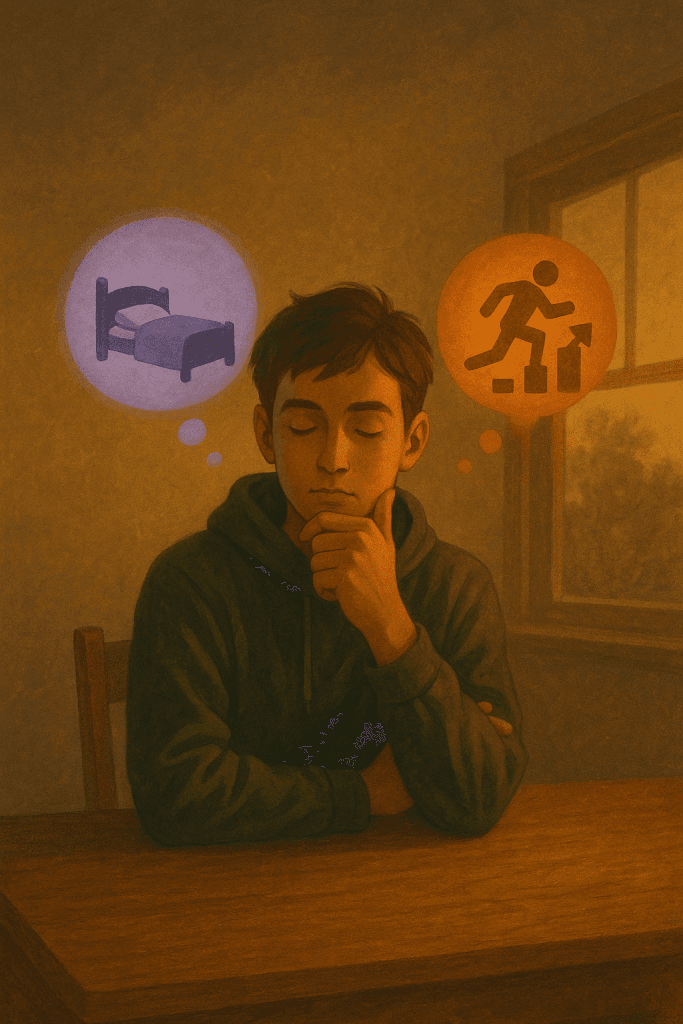
Psychologists call it affect labelling: putting words, or even a simple number, to feelings can calm amygdala activity and free cognitive bandwidth. In wa4u that micro-label becomes a signal, not a diagnosis. Behind the scenes every coach watches for three things.
- Tone match--a low-energy tag nudges the coach to slow down; a charged tag invites concise focus.
- Depth dial--tension at 8/10 keeps the coach close to validation; at 4/10 it may invite a deeper dive.
- Safety flare--patterns such as "hopeless" plus 9/10 trigger safeguards or human hand-off, never prescriptions.
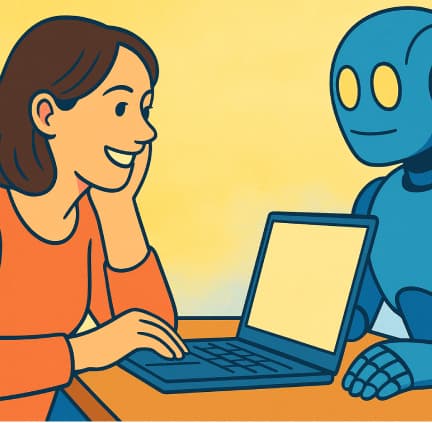
Inside a wa4u chat
You: My brain feels foggy--like everything's half-lit.
Coach Kai: If the fog had a colour, what would today's shade be?
You: Grey-blue.
Kai: Grey-blue can hold both hush and depth. Want to sit with the hush first, or search the depth?
The mood word "foggy" guides Kai toward imagery rather than bullet-point fixes. One small check-in shifts the whole conversational texture, turning a vague slump into a concrete launchpad for reflection.
Self-awareness without self-surveillance
Lightweight check-ins meet a Gen Z reality: clarity is welcome; constant measurement is not. Our community asks for tools that feel relatable, private, and low friction. A single mood ping satisfies that need without the baggage of streaks or pop-up warnings.
Takeaway
Mood-aware coaching is not about catching you out or chasing better data. It offers a momentary mirror that says "start where it is real" and lets you walk forward with clearer footing. When technology respects emotions as context instead of conditions, thinking becomes easier.
Start with one question: how are you, really?